Anatomy of a Wood-Fired Oven: What It Takes to Bake the Old Way
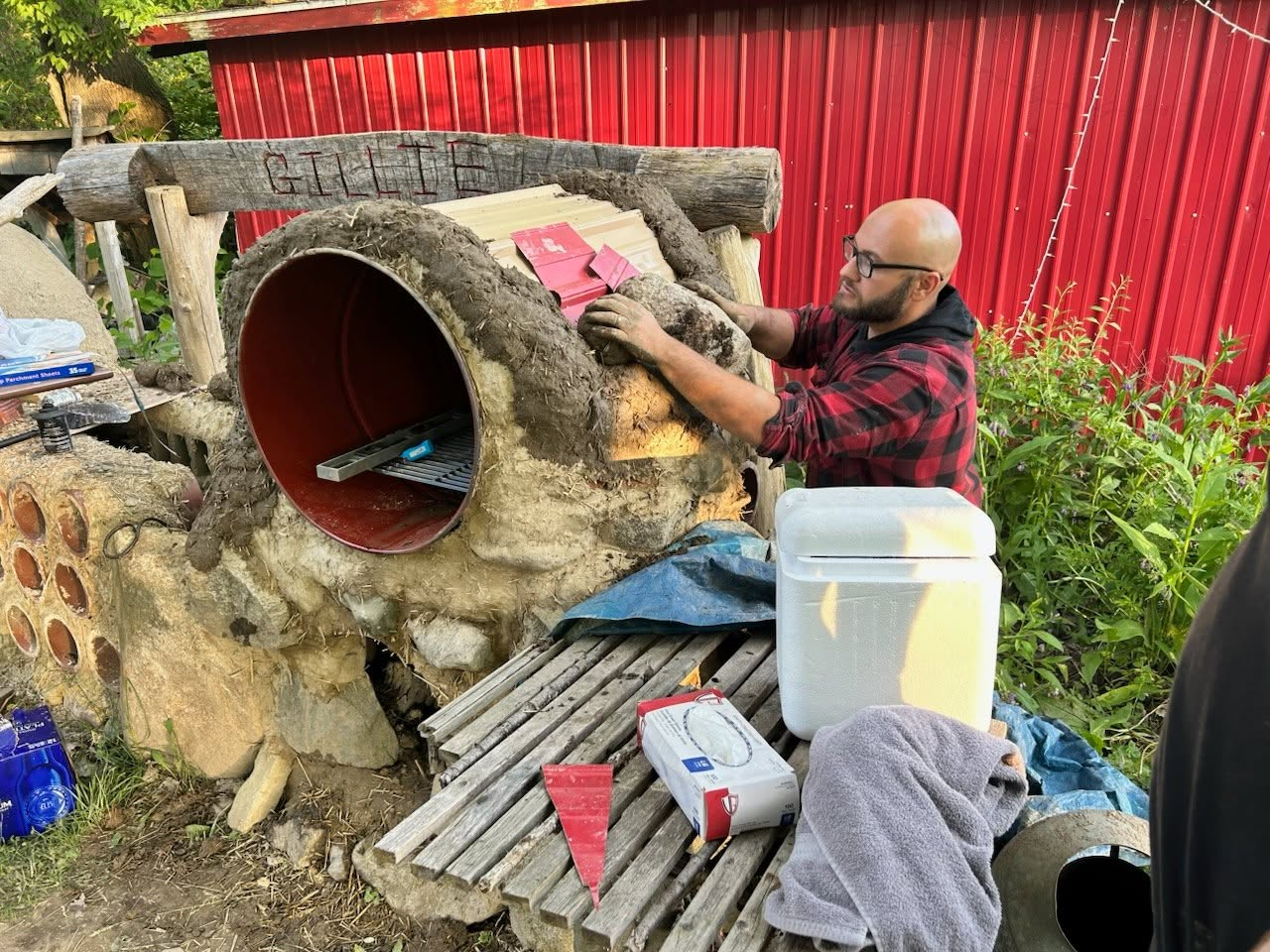
Behind every loaf from our Mount Morris bakery is an oven that wasn't bought off a shelf. It was built by hand, using traditional materials and techniques that go back centuries. Here's a look at what actually goes into a wood-fired oven like this, and why it makes such a difference in the bread we bake for customers throughout Mount Morris, Flint, Flushing, Grand Blanc, Montrose, Clio, and Swartz Creek.
The core: a repurposed steel drum
At the heart of the build is a food-grade 50-gallon steel drum, once used for apple cider at Almar's Organic Apple Orchard. Its cylindrical shape makes it a natural mold for an oven chamber, strong, heat-resistant, and able to hold its form under the weight of the materials packed around it.
The shell: cob construction
Wrapped around the steel core is a thick layer of cob, a traditional building material made from clay, sand, and straw. Cob has been used to build ovens and structures for thousands of years because of one key property: it retains heat exceptionally well. Once a cob oven is fired up, the dense material acts like a thermal battery, holding steady, radiant heat long after the flames die down. That's very different from a standard kitchen oven, which cycles its heating element on and off to maintain temperature.
The base: brick flue tile
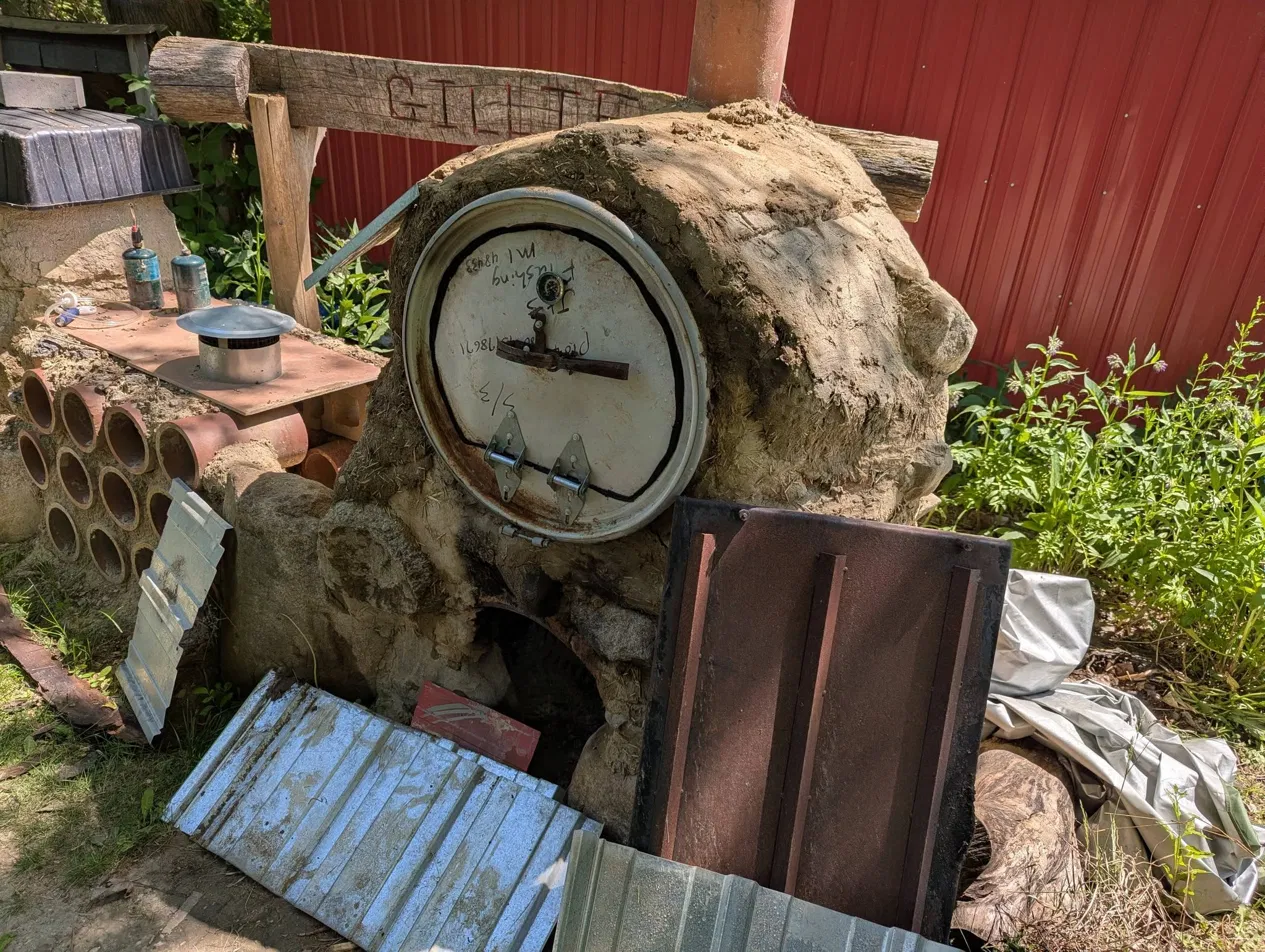
Underneath the firebox sits a stacked base of brick flue tiles. These provide airflow, insulation, and a stable foundation, helping regulate how heat and smoke move through the structure.
Venting: chimney and door
A chimney built from clay/terracotta tiles runs up through the cob shell to vent smoke safely away from the bake chamber. The oven's mouth is sealed by the drum's original food-grade steel lid, trapping heat inside once a fire has built up a bed of coals, similar to how a Dutch oven traps steam and heat around bread.
Why it matters for the bread
Wood-fired, cob-insulated ovens bake differently than any standard kitchen setup. The steady, high, radiant heat is what produces a deeply caramelized, crackling crust and a fuller, more complex flavor in the crumb, the kind of results that come from centuries-old baking methods, not a temperature dial.
It's slower. It's messier. It takes real physical effort to build and to run. But it's exactly why wood-fired sourdough from a small Genesee County bakery tastes the way it does.
Ready to taste it yourself? Browse the Menu and place your order for Tuesday pickup in Mount Morris.
Browse the Menu
About the Baker
Merrit is the baker behind Renegade Sourdough. A self-taught fire-and-flour obsessive who traded modern shortcuts for wild fermentation and a hand-built wood-fired oven.